In Category: Real Estate
Published at: May 18, 2026
For a homebuyer walking into a flat in Pune today, price and location are never the only things on their mind. They are looking at how light travels over the living room at 10 a.m., whether the kitchen is partitioned from the rest of the house, and whether there is a quiet corner for a laptop to live without taking over the bedroom. The home design in Pune has silently become one of the most important factors in property discussions, shaping initial impressions, negotiation, livability, and prospective resale value.
An example of this shift can be seen in Pune's residential market. As per Knight Frank India, the city registered 1,90,025 property registrations in 2024. It is a market where buyers are more mindful, more design-conscious, and ready to pay a premium for homes that are built well. Whether it is first-time buyers or investors, the design of the home is now as crucial as its location.
The first minute spent inside a home set the tone for everything that follows. Buyers form an instant view of space, comfort, and possibility before they have even processed a single data point. A flat with a cramped entrance and narrow circulation paths, for example, will always be a constraint, no matter what the carpet area. A flat that opens into a well-lit, proportionate living area, on the other hand, signals potential.
The demand for lifestyle-focused homes has intensified as nuclear families, dual-income professionals, and returning NRIs set the pace in markets like Baner, Wakad, and Kharadi. These buyers are moving up the value curve and design is the language of that upgrade.
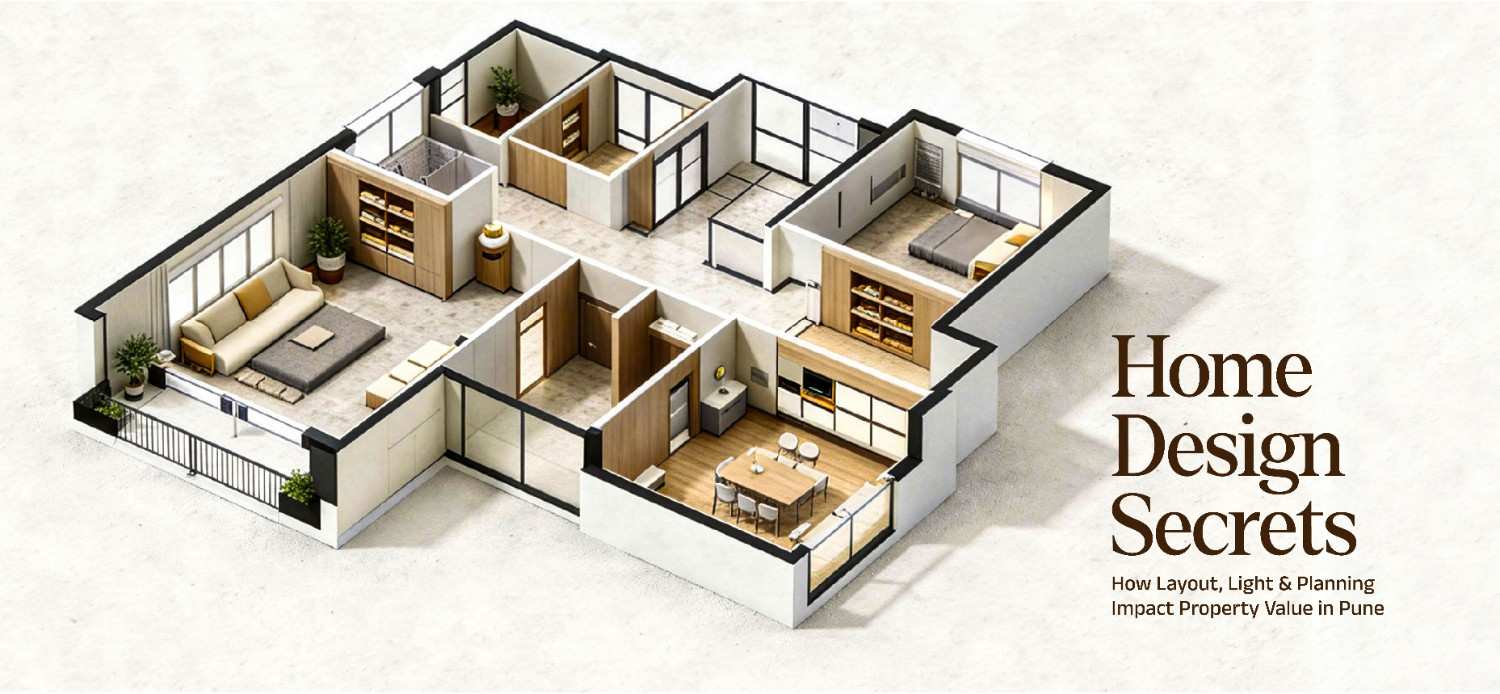
The most underestimated element in residential real estate is probably flat layout planning. Two flats with the same carpet areas can offer completely different living experiences depending on the arrangement of rooms relative to one another.
The advantages of natural light and a home go far beyond aesthetics, influencing electricity bills, mental health, and the apparent size of each room.
In Pune's residential market, the right design features make a home more livable and significantly more valuable. Here is what actually moves the needle on property value.
| Design Feature | What It Delivers |
|---|---|
| Spacious living areas with logical furniture zones | Flexibility, perceived scale, and stronger first impressions during site visits |
| Smart kitchen planning with adequate counter space and airflow | Daily usability and seamless connection to dining and utility areas |
| Large windows maximizing light and ventilation | Lower electricity costs, better air quality, and higher buyer preference |
| Vastu and home layout alignment | Faster sales and reduced negotiation friction. According to 99acres, across major cities over 90% of buyers prefer Vastu complaint homes. |
| Rainwater harvesting, solar provisions, and wellness zones | Lower long-term maintenance costs and broader buyer appeal in mid-to-high-end segments |
Pune real estate trends are driving an evolution in how developers approach structural design, as buyers are now prioritising lifestyle quality over square footage.
Even in Pune's well-informed market, buyers sometimes overlook design red flags that affect long-term value and daily comfort.
Home design in Pune becomes a cumulative advantage that influences the comfort of living, the quickly it can be sold, and the longevity of its value during different market cycles. With the changing dynamics of determining the value of real estate in Pune moving from being all about the location to being more lifestyle-oriented, the aspect of design has transitioned from being a distinguishing feature to a norm expected by all informed buyers. It is when the elements of design become investment variables that their long-term value can be realized.
Explore thoughtfully designed homes in Pune.
1. How does home design affect property value?
The houses with efficient designs, natural lighting, and good ventilation are always sold quickly, have better price proposals, and retain their value better than other houses.
2. Why is natural light important in apartments?
Natural light decreases the cost of electricity, enhances the wellness of the people, and makes the space feel more alive and larger. This impacts buyer preferences and resale opportunities.
3. What layout features do Pune homebuyers prefer?
Pune homebuyers favor layouts that include open kitchen and living areas, ventilated bedrooms, separate spaces for working from home, room placements that follow Vastu principles, and balcony spaces.