
In Category: Blogs
Published at: February 27, 2026
Honestly, Punawale wasn’t on most people’s priority list a few years ago. It was just “that area after Wakad” where prices were slightly lower and development was still catching up.
But things have changed. A lot.
Today, when people look at homes in West Pune, Punawale is very much part of the conversation. Rates have gone up gradually, good projects are getting picked up faster, and buyers aren’t treating it like a backup option anymore.
So what’s actually happening here? Why are prices moving up and is this growth sustainable?
Let’s break down the real factors driving Punawale real estate trends in 2025–26.
Location remains the biggest reason behind the steady rise in Punawale property prices.
Punawale sits strategically between:
It also enjoys direct connectivity to the Mumbai–Pune Expressway and NH-48, making daily commuting and intercity travel seamless.
For working professionals employed in Hinjewadi’s IT hubs, Punawale offers proximity without the congestion and pricing pressure of Wakad. This “location-value equation” is one of the core drivers of punawale residential growth.
Infrastructure upgrades are reinforcing Punawale’s investment potential.
The Pune Metro Line 3 (Hinjewadi–Shivajinagar corridor) is expected to significantly reduce travel time for IT professionals. Even before completion, metro-led anticipation has improved buyer sentiment across West Pune.
The proposed Pune Ring Road and internal road upgrades around Punawale and Ravet are set to decongest traffic and improve long-term livability. Infrastructure connectivity historically supports sustained appreciation rather than short spikes.
Schools, healthcare centres, supermarkets, and retail hubs have rapidly expanded in and around Punawale. What was once a developing suburb is now a self-sufficient residential zone a key reason flats in Punawale 2026 are attracting serious end-users.
Punawale’s demand is employment-backed, not investor-only.
The spillover demand from Rajiv Gandhi Infotech Park continues to shape the area’s housing absorption rates. Thousands of IT professionals prefer living within a 10–15-minute commute radius.
This has created:
Unlike speculative markets, Punawale sees a healthy mix of end-users and rental-focused investors, which supports steady appreciation in property in Punawale.
Another key factor driving punawale real estate trends is the limited supply of organised, high-quality developments.
Over the past two years:
At the same time, buyers are shifting toward mid-premium homes with better layouts, amenities, and long-term value. As a result, well-located and thoughtfully planned projects are seeing faster absorption, pushing prices upward gradually.
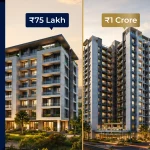
Current price bands for residential apartments in Punawale are steadily moving upward compared to 2–3 years ago, especially for mid-premium configurations.
Compared to Wakad and Hinjewadi, Punawale still offers relatively better entry pricing while benefiting from similar employment drivers. This positions it strongly for stable growth in 2026, rather than unpredictable spikes.
For buyers researching punawale investment potential, this balance between affordability and growth is crucial.
Understanding buyer profiles helps explain demand acceleration.
Young salaried professionals seeking value-for-money homes near IT hubs.
Employees working in Hinjewadi preferring shorter commute times.
Investors targeting steady rental yields rather than speculative flipping.
Families looking for better-planned, newer developments at competitive pricing.
This diversified buyer base strengthens the long-term outlook for flats in Punawale 2026.
Among developers contributing to Punawale residential growth, Aishwaryam Group has focused on delivering well-planned homes in strategic growth corridors.
Projects such as:
are positioned in areas benefiting directly from infrastructure connectivity and employment-driven demand.
Rather than speculative pricing, these developments align with:
For buyers evaluating punawale new projects, choosing developments in strong micro-locations within Punawale itself can make a significant difference in long-term appreciation and rental consistency.
Punawale property prices are rising because of fundamentals:
The area still offers better value compared to Wakad and Hinjewadi while sharing similar growth catalysts.
For serious buyers and investors, 2025–26 represents a window where Punawale is transitioning from “affordable alternative” to “established micro-market.” Evaluating options now especially in well-located, credible projects may offer stronger long-term returns than waiting for prices to fully mature.
1. Are property prices in Punawale increasing?
Yes, Punawale property prices have shown steady year-on-year growth due to infrastructure upgrades, IT demand, and limited organised supply.
2. Is Punawale good for investment in 2026?
Punawale offers strong investment potential in 2026 because of metro connectivity, proximity to Hinjewadi IT Park, and balanced end-user demand.
3. How does Punawale compare with Wakad?
Punawale generally offers better entry pricing than Wakad while benefiting from similar employment and infrastructure drivers.
4. What types of flats are in demand in Punawale?
2 BHK and compact 3 BHK apartments in organised, amenity-rich projects are seeing the highest demand.
5. Are rental yields strong in Punawale?
Yes, rental demand from IT professionals supports competitive rental yields compared to many central Pune locations.