
In Category: Real Estate
Published at: November 26, 2025
Pune’s real estate market is entering a new growth cycle in 2025, one that’s defined by smarter infrastructure, lifestyle-driven planning, and value-focused developments. Once seen as a satellite to Mumbai’s housing demand, Pune today stands on its own as a major investment destination.
According to a CREDAI Pune Metro–CRE Matrix report (Feb 2025), the city has witnessed nearly 56% growth in housing sales volume over the past five years, reflecting a surge of end-user and investor confidence. With IT corridors expanding and connectivity projects transforming suburban pockets, a new set of emerging micro-markets are taking the spotlight.
These are not just affordable zones on the outskirts, they’re rapidly self-sufficient ecosystems where workspaces, retail, and premium housing converge.
In a dynamic city like Pune, “emerging” doesn’t only mean new. It means areas evolving from peripheral zones into integrated urban centres.
An emerging micro-market is typically characterised by:
In short, these areas offer buyers and investors a chance to enter early — before prices reach peak maturity. And in 2025, Punawale, Hinjewadi, Ravet, Tathawade, and Moshi are leading this next phase of Pune’s real estate evolution.
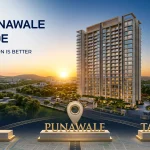
Once overshadowed by neighbouring Wakad, Punawale has become one of PCMC’s most promising real estate stories. Its proximity to Hinjewadi Phase 1 & 2, direct access to the Mumbai-Pune Expressway, and expanding metro connectivity have made it a top choice for professionals seeking modern homes close to work.
The average property price in Punawale hovers around ₹7,000–₹7,200 per sq ft, but its 5-year appreciation of over 22% has caught investors’ attention. New-age residential projects here focus on spacious 2 & 3 BHK apartments, sustainable amenities, and low-density layouts — features that set it apart from crowded city pockets.
For end-users, Punawale offers the sweet spot between affordability and lifestyle convenience. For investors, it offers long-term upside as social infrastructure continues to strengthen.
Hinjewadi remains the heart of Pune’s economic growth. As one of India’s largest IT parks, it houses companies like Infosys, Cognizant, and TCS, employing over 2 lakh professionals.
What’s changing in 2025 is the shift toward integrated townships and premium residential clusters within Hinjewadi itself. With the ongoing Metro Line 3 and the Ring Road project nearing completion, daily commutes to Balewadi, Baner, and PCMC will become even faster.
Average prices here are around ₹8,000 per sq ft, with steady appreciation driven by rental demand. Investors continue to see Hinjewadi as a safe, income-generating zone in Pune’s west.
According to Jhamtani Insights (2025), Ravet’s annual growth potential is estimated between 18 % and 25 %, supported by its location advantage between the Mumbai–Pune Expressway and the arterial Aundh–Ravet BRT corridor.
Ravet offers the benefits of excellent connectivity to Pimpri, Chinchwad, Wakad, and Punawale, making it ideal for professionals working across PCMC. The area also enjoys upcoming retail expansions and reputed schools, turning it into a holistic residential destination.
Its property prices remain relatively moderate (₹6,500–₹7,000 per sq ft), giving first-time homebuyers and investors an attractive entry point.
Tathawade has undergone a complete transformation in the last decade. What was once an institutional zone dominated by colleges and hostels has evolved into a thriving residential and commercial hub.
The suburb’s proximity to both Wakad and Hinjewadi makes it one of the most strategically located areas in west Pune. With developers introducing high-rise gated projects, co-living spaces, and commercial complexes, Tathawade appeals to students, working professionals, and small families alike.
Infrastructure such as the widened Mumbai–Bangalore highway frontage and upcoming metro connectivity has further boosted its livability. Prices average between ₹7,500 and ₹8,000 per sq ft, with growing traction from investors looking for consistent rental yields.
Located in the northern corridor of PCMC, Moshi has evolved from an industrial node into a well-connected residential destination. The Nashik Phata Flyover, Bhosari–Alandi Road expansion and Pimpri–Chinchwad Metro Line have drastically cut down travel time to employment centres.
With ongoing projects around the International Convention & Exhibition Centre (ICEC), Moshi is poised for large-scale commercial growth. Residential prices here range from ₹5,800 to ₹6,300 per sq ft, relatively affordable compared to western Pune pockets.
For investors, Moshi represents the perfect “buy early” zone with strong potential for both rental income and appreciation over the next decade.
A few clear trends are driving Pune’s micro-market expansion:
As GetMyGhar’s Pune 2025 report notes, “Pune is a market of micro-stories.” Each of these zones — Punawale, Ravet, Tathawade, Hinjewadi, and Moshi, represents a distinct growth story shaped by infrastructure, pricing, and community planning.
For over a decade, Aishwaryam Group has been at the forefront of Pune’s western corridor development, creating communities that combine thoughtful design with long-term value. The brand’s presence in Punawale and Moshi highlights its belief in these growth corridors, areas where homebuyers don’t just purchase property, but a better quality of life.
Projects such as Aishwaryam Insignia in Punawale embody this philosophy with spacious homes, premium finishes, and modern amenities that cater to today’s aspirational families. Similarly, Aishwaryam’s upcoming developments continue to strengthen the urban fabric of PCMC by integrating wellness, connectivity, and community living.
By investing early in these emerging markets, Aishwaryam has demonstrated not just foresight but a deep understanding of Pune’s evolving urban geography, a perspective that homebuyers and investors can rely on.
Pune’s real estate journey in 2025 is about evolution, not speculation. The city is expanding outward with purpose, creating new growth zones where infrastructure, affordability, and lifestyle intersect.
For investors seeking long-term capital appreciation, and for families looking for future-ready homes, these five micro-markets, Punawale, Hinjewadi, Ravet, Tathawade, and Moshi, present the most compelling mix of value and potential.
As urban development continues and demand remains strong, these localities will define the next decade of Pune’s property story, a story built on smart planning, sustainable growth, and the vision of developers like Aishwaryam Group, who continue to build not just homes, but trust.